The Knockdown Rebuild Process In Byron Bay: What Homeowners Need To Know
A knockdown rebuild sounds simple until you're standing on a sloped block wondering how the excavator is going to reach the back corner. For homeowners considering projects that may require demolition in Byron Bay, the process involves far more than pulling a house down – council sign-off, utility disconnections, asbestos checks and site access all shape how the job unfolds. We work through each of these stages with homeowners every day, and understanding them before you engage a contractor makes the whole rebuild smoother, faster and less stressful.
Is a Knockdown Rebuild Right for Your Property?
Not every renovation project needs a full knockdown. Some homeowners find that extending or renovating the existing structure meets their needs, while others reach a point where the original build simply can't support what they want to achieve. Getting this decision right early on makes every later stage easier to plan.
A few signs point towards a full rebuild:
- The existing structure has significant structural, moisture or pest damage
- Renovation costs are approaching or exceeding rebuild costs
- The block's orientation or size limits what can be added onto the current footprint
- Heritage or design constraints make extension impractical compared to starting fresh
Once the decision is made, the next steps involve working out how demolition Byron Bay NSW rules apply to your specific block, since this shapes the entire project timeline.
What Council Approvals Do You Need for Demolition in Byron Bay?
Byron Shire Council requires a demolition application before any work begins, and the requirements can vary depending on the age of the dwelling, its heritage status and its proximity to neighbouring properties. Coastal and hinterland blocks sometimes carry additional overlays that affect what's approved and how quickly. We manage this paperwork for demolition services across the Northern Rivers, so nothing gets missed on your Byron Bay application.
Typical approval steps include:
- Lodging a demolition application with supporting site plans
- Confirming whether a heritage or conservation overlay applies
- Arranging any required notifications to adjoining owners
- Allowing processing time before a start date is locked in
Knowing what can go wrong before you start saves time and money – our guide to
problems that delay demolition in Byron Bay covers the most common hold-ups and how pros handle them.
How Do Byron Bay's Site Conditions Affect the Demolition Process?
Byron Bay properties rarely offer a straightforward, flat block with easy street access. Coastal sites, sloped terrain and tight laneway access all influence how demolition equipment can be used and how long the job takes, and we plan around these conditions on every site we visit.
Site conditions worth flagging early include:
- Sloped or split-level blocks that limit machinery movement
- Narrow driveways or laneway access in older pockets of town
- Proximity to native vegetation or waterways requiring extra care
- Heritage-listed streetscapes where demolition methods are more closely monitored
Choosing the right team for your knockdown rebuild starts with qualified demolition services Byron Bay homeowners trust for safety and compliance, particularly on blocks with tricky access or terrain.
When Should Utilities Be Disconnected Before Demolition?
Before any machinery arrives, every utility connection to the property needs to be safely disconnected. This includes electricity, gas, water, telecommunications and stormwater connections, each of which involves its own provider and lead time.
This stage usually covers:
- Lodging disconnection requests with relevant utility providers
- Confirming timeframes, since some disconnections take longer than others
- Capping or removing redundant connections to meet council standards
- Coordinating disconnection dates with the demolition schedule
Utility disconnection is one of the most common causes of scheduling delays, so we get requests in early to keep the broader timeline on track.
Why Do Asbestos Checks Matter in Older Byron Bay Homes?
Many homes in and around Byron Bay were built during periods when asbestos was a common building material, particularly in eaves, fibro cladding and older bathroom linings. A thorough site inspection is a standard part of how we prepare every job, identifying whether asbestos is present before any demolition work starts.
Key parts of this process include:
- A detailed pre-demolition inspection of the property
- Identification and labelling of any asbestos-containing materials
- Safe removal in line with current workplace and environmental regulations
- Documentation confirming the site is clear before demolition proceeds
Many older Byron Bay homes require professional asbestos removal Byron Bay contractors must carry out before any machinery breaks ground.
What Happens During the Demolition Process?
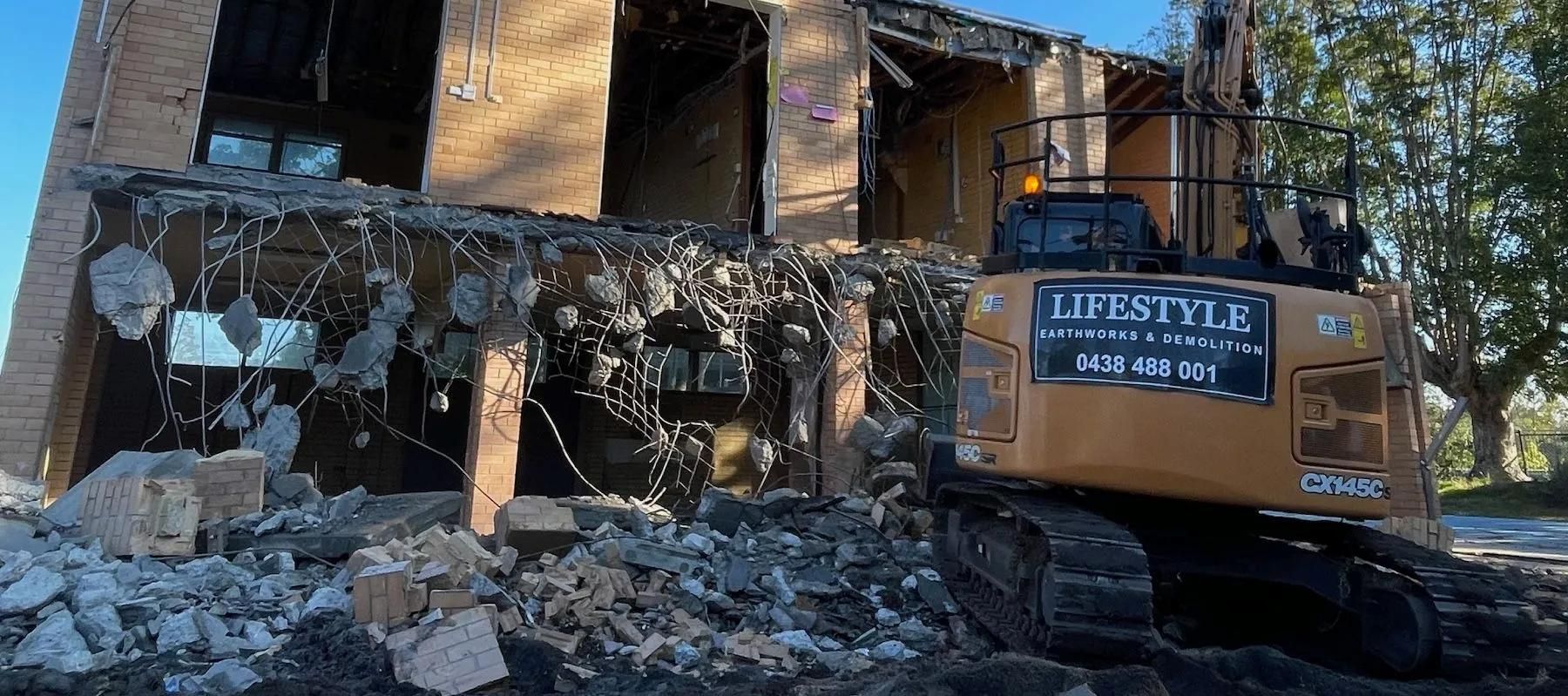
Once approvals are in place, utilities are disconnected and any asbestos has been cleared, the physical demolition can begin. The exact method used depends on the size of the dwelling, its construction materials and the site's access constraints.
The demolition stage generally involves:
- Erecting site fencing, signage and safety barriers
- Disconnecting any remaining minor services on site
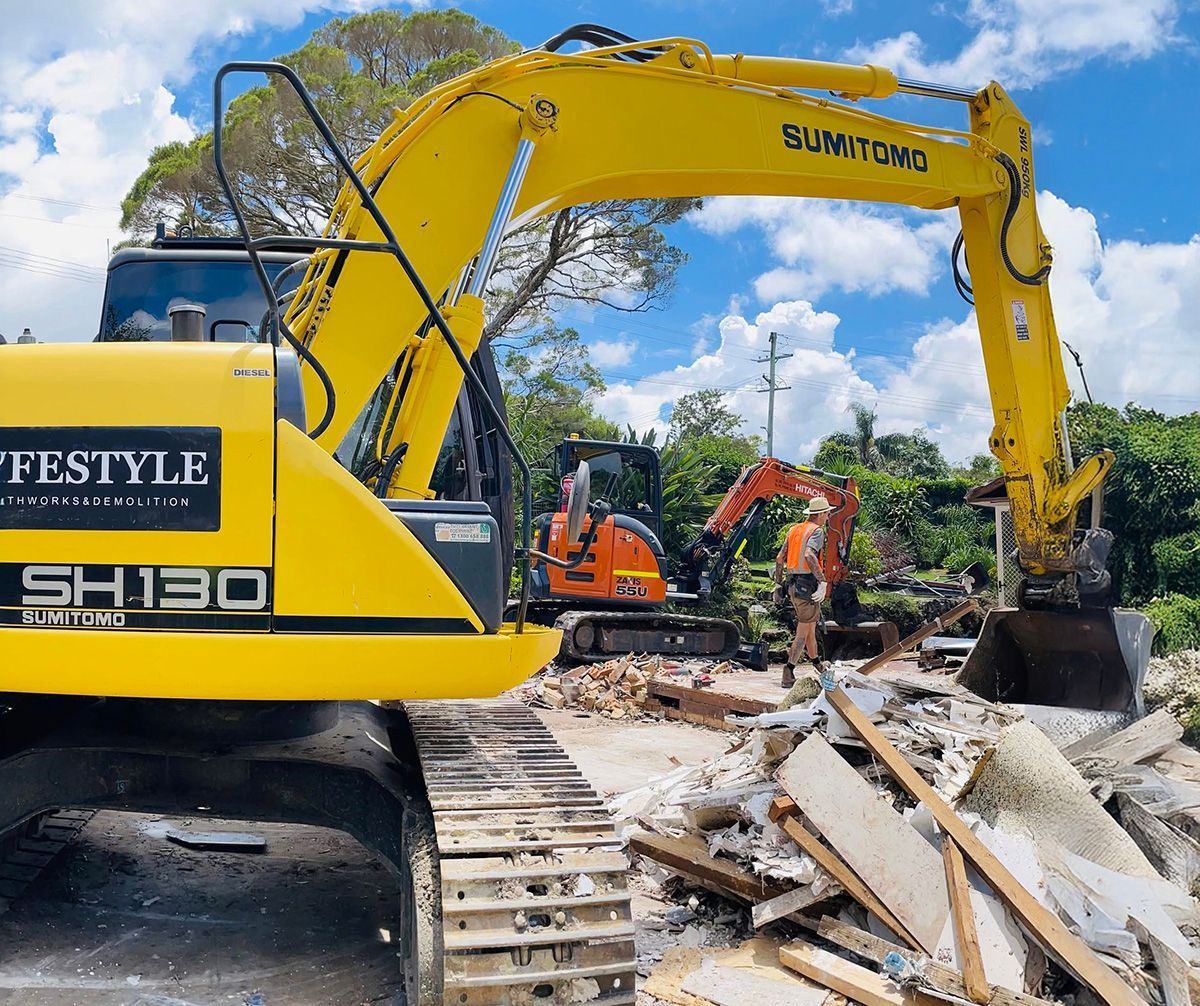
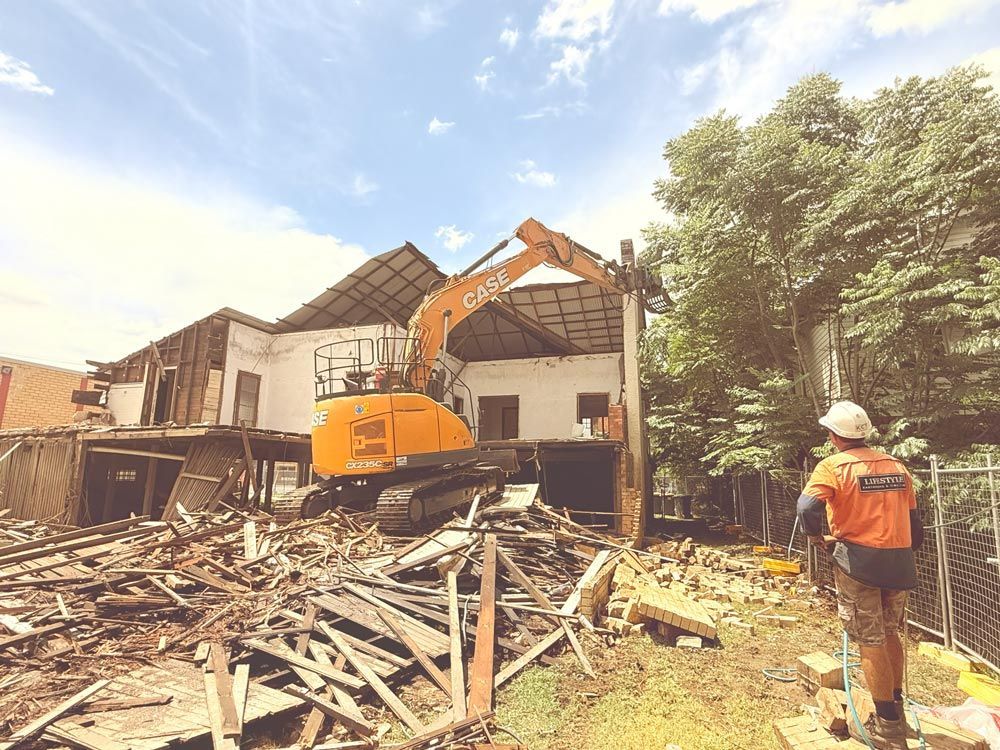
- Mechanical demolition of the structure using appropriate machinery
- Ongoing dust and noise management throughout the works
On tighter or sloped Byron Bay blocks, machinery selection and sequencing often need to be adjusted to suit the terrain, which is why we assess every site closely before demolition day.
How Is a Site Cleared & Prepared for Construction?
Once the structure is down, the site still needs considerable work before it's ready for a builder. This stage often gets overlooked in early planning, but it has a direct impact on when construction can actually start.
Site clearing typically includes:
- Removal and appropriate disposal of demolition waste and debris
- Extraction of old footings, slabs or foundations where required
- Backfilling and levelling the site as needed
- Erosion and sediment control measures, particularly relevant on coastal blocks
Sites near waterways or with sandy coastal soils sometimes need extra sediment control to meet environmental conditions attached to the approval, and we build this into the clearing process rather than treating it as an afterthought.
What Does Handover to Your Builder Involve?
The final stage of the demolition process is formally handing over a cleared, build-ready site. This handover point is where demolition responsibilities end and construction begins, so clear documentation matters for both parties.
Handover generally includes:
- A final site inspection confirming it meets agreed conditions
- Photographic records of the cleared site
- Confirmation that all waste has been removed and disposed of correctly
- Provision of any compliance certificates required by the builder or council
A clean, well-documented handover reduces the chance of disputes later and gives your builder a clear starting point, which is exactly how we like to leave every site.
Ready to Start Your Knockdown Rebuild?
At Lifestyle Demolition, we understand that every Byron Bay property comes with its own site conditions, approval requirements and timeline considerations. Whether you're dealing with a sloped block, a heritage overlay or an older home that needs asbestos checks, working through each stage in the right order keeps your rebuild on schedule. If you're looking for a Byron Bay demolition contractor to guide you through the process, from house demolition in Byron Bay through to a cleared, build-ready site, contact our team for a free, no-obligation consultation and find out what the process looks like for your specific property.
Frequently Asked Questions